
Let’s Talk About Parasites in Dogs and Cats: Fleas, Ticks, Mites, and Lice

Parasites like fleas, ticks, mites, and lice are common problems for dogs and cats, even in places like Billings, Montana where winters can be cold. These pests do more than make pets itchy — they can spread diseases, cause skin infections, and create serious health problems for both animals and people. In this article, Dr. Erika Cantamessa explains the most common external parasites affecting pets and why prevention is so important.
dog cat lurking tick

What Are External Parasites in Dogs and Cats?

How do you feel about bugs? Personally, I see them as a necessary evil. They look strange, they move strangely, they are small and get into places I would rather not find them (like my ceiling, my shower, my fruit bowl, sometimes my hair). Despite this most bugs serve an environmental purpose that is necessary for our world to stay in balance.

Then there are parasites. That special subset of bugs that live off of other living creatures, such as our dogs and cats. You know who I’m talking about. Fleas, Ticks, Mites and Lice. Known collectively as External Parasites, these lovely creatures bite, chew on and suck the blood from our beloved pets. And in so doing they cause more than an itchy nuisance. Many move from one dog or cat to another, spreading some pretty serious diseases.

Before we get into what we can do about avoiding or eliminating these disgusting pests let’s talk a little about who the culprits are and what they can do.

Common Montana external parasites that affect pets include:

These parasites bite, chew, or feed on the blood of dogs and cats, and some can spread diseases to pets and even humans.

fluffy cat scratching itself

Fleas in Dogs and Cats​

Does that word just make your skin crawl? Are you scratching your leg right now thinking about little jumping insects crawling all over you? I am. Here in Billings, Montana we have not historically had a huge problem with fleas. That is because fleas like it warm and humid.

When it is cold and dry fleas are slower to lay eggs, the eggs are slower to hatch and the larvae slower to develop into adults. But fleas are very hearty and they can survive in the environment, even in suboptimal conditions, for months. And have you noticed that we aren’t having long, severely cold weather? This means our flea problem is going to get worse. Even without the humidity this warmer weather encourages more hatchings and speeds the development of adult fleas.

Why should we care about fleas here in Montana?

At its simplest fleas make our pets itchy. And while fleas cannot live on human blood they can still bite us and make us itchy. Some dogs and cats are also allergic to flea saliva, this means the bite of even one flea can cause severe itching, rashes and miserable allergic reactions.

Then there are the diseases. Fleas transmit tapeworms, cat scratch fever, plague, typhus, tularemia, among others. While some of these only affect our pets, many can also be transmitted to humans. Of biggest concern in our area is cat scratch disease although children that play with flea infected dogs may also unintentionally ingest fleas and develop tapeworms

Why Fleas Are a Problem for Dogs and Cats

Fleas can cause several problems for pets and people, including:
1 dog in mt with tick

Ticks in Dogs and Cats​

By far the most concerning external parasites in the Billings area are ticks. These eight-legged little creeps are everywhere. They also like warm, humid environments. Historically we have had a ‘tick season’ starting in mid to late March and continuing into early to late October.

Essentially tick season in Montana is from Spring thaw to the first hard freeze in the Fall.

Once more we see changing weather patterns resulting in changing parasite patterns. We haven’t been seeing the nice long freezes that would kill off most of the ticks and their eggs over the hard winters. These warmer, earlier Springs mean a longer breeding season for the ticks.

It also means we are starting to see tick species in our area that we didn’t see in the past. This is occurring for several reasons. Some of it has to do with people traveling with their pets and bringing along hitchhiker parasites that then establish in our area. Primarily, though, it is because of wildlife migration. Longer warm spells and increasing human encroachment on habitats have resulted in wildlife expanding their territories. Over time this is leading to movement of previously unseen ticks and their diseases in our area.

Why should we care about ticks in Montana?

Ticks exist to transmit disease. Each tick species has their own specific disease specialties. These diseases are transmitted often by adult and immature ticks. Most of these diseases can make our dogs and cats ill as well as humans.

A few of the diseases that are of concern in our area include Ehrlichia, Rocky Mountain Spotted Fever, and Lyme disease. Lyme is new to our area, and we haven’t seen many cases yet, but we expect more in the coming years. Just in the past year there were confirmed cases in Yellowstone County. Lyme is one of the tick borne diseases that can be transmitted to humans and cause illness. By keeping ticks off our pets we can reduce our own risk of this debilitating disease.

Tick Season in Montana & East of the Divide

eat mite on microscope 1 scaled

Lice in Dogs and Cats

No these are not the same lice they check kids for in grade school. That is because every species has their own lice. Dogs get dog lice, cats get cat lice, and people get people lice. In general, this means that we can’t share lice, but it isn’t unheard of for lice to catch a ride from one host to another by way of an unsuspecting third party.
(Image Right: Louse under a microscope).

Like most parasites, lice prefer warm, moist environments. What is different is that lice only live on their hosts. Unlike fleas and ticks, lice cannot survive for more than a few days in the environment away from a host. And they only lay eggs on their host.

Why should we care about lice?

Similar to fleas, the biggest problem with lice is the itching. They cause severe itching and often skin infections from all the scratching.  They are also very contagious. Just like the head lice everyone feared in grade school. If your dog or cat comes into contact with a friend of the same species that has lice, very soon you will discover your pet has lice. While lice can transmit tapeworms, they are primarily a nuisance. Being so contagious, if lice are found on your pet then your pet must go into quarantine until the lice have been eliminated. This means they need to stay away from the groomer, the dog park, the boarding kennel, and day care.

Yep, this one has me scratching my head and imagining little bugs crawling through my hair, how about you?

Signs of Lice in Dogs and Cats

Common signs of lice in pets include:

vet microscope dr Erika Cantamessa billings mt

Mites in Dogs and Cats

Now this category is both more complicated and simpler than any of the others. Mites are very tiny. Unlike lice, fleas or ticks, mites are generally only visible with a microscope. They generally live in hair follicles or burrow under the skin. The best (or maybe worst) part, some mites are supposed to be there. On all of us. Just about every living thing on Earth has its own mites. These mites, known as commensal parasites, eat our dead skin cells and help keep us healthy. The commensal parasites on our dogs and cats are called Demodex mites.
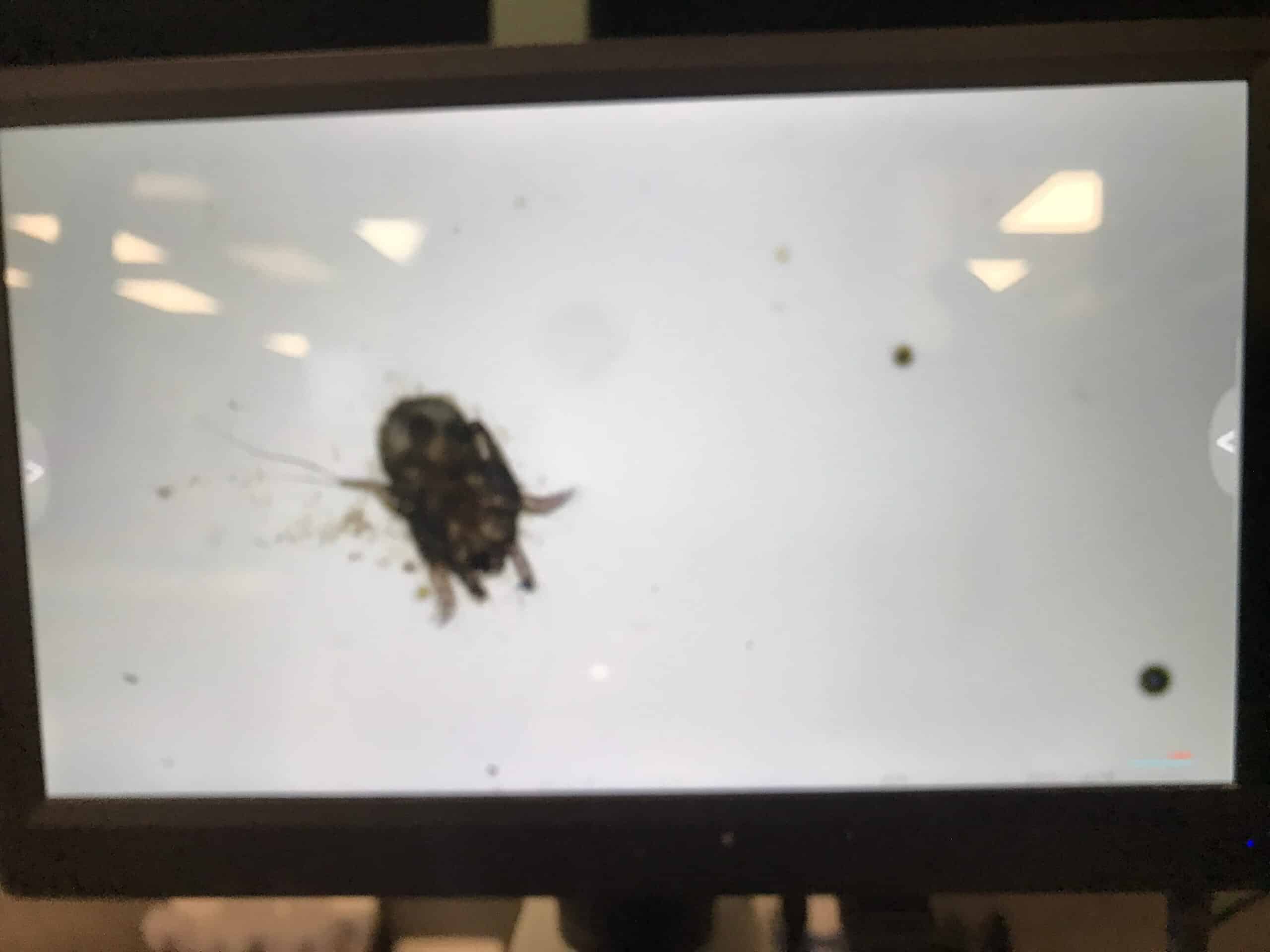
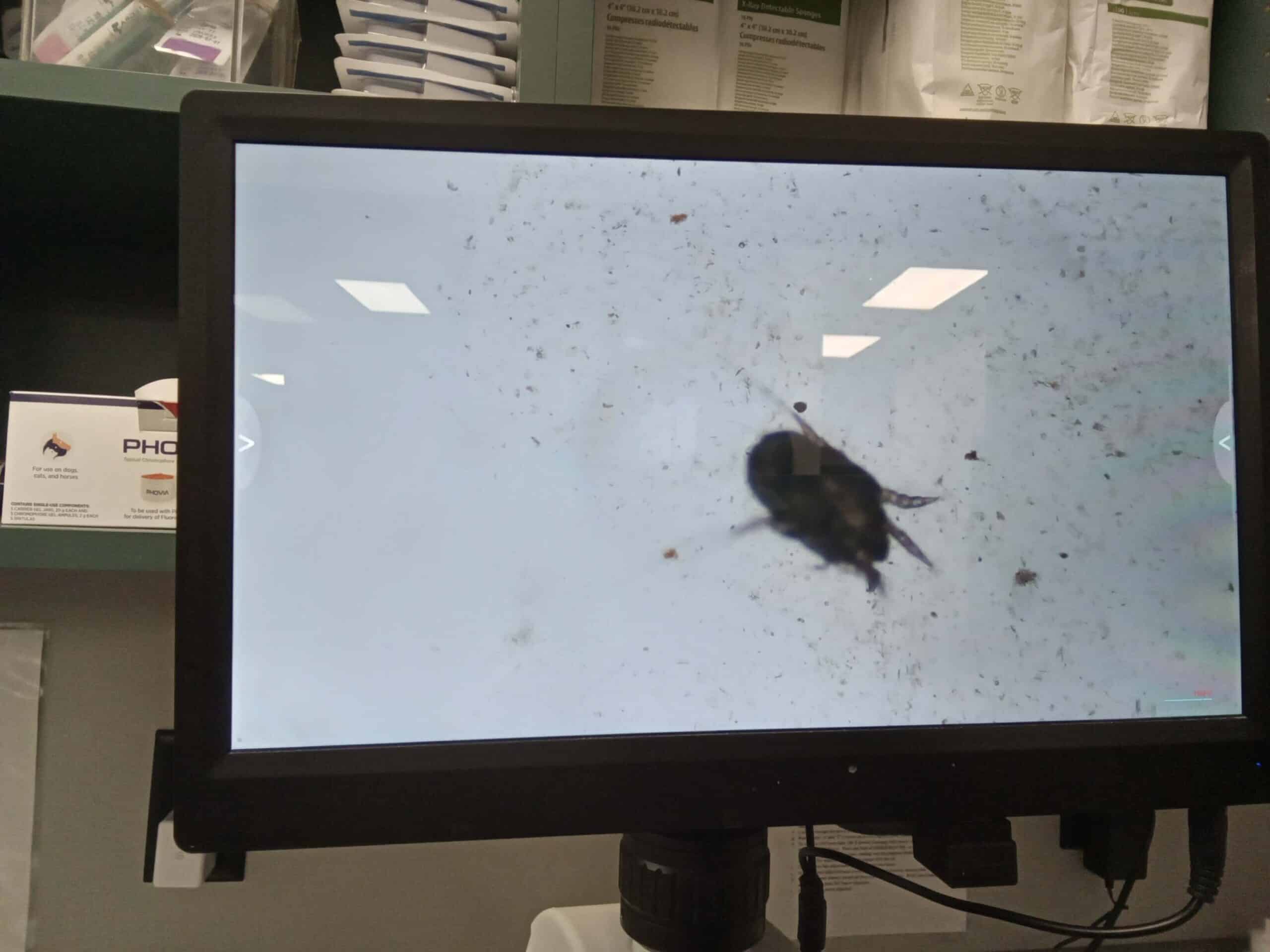
Of course you can have too much of a good thing. Sometimes, especially in very young animals with still developing immune systems, the mites will over multiply. This excess of mites may cause itching and often causes hair loss. Dogs with this problem are said to be suffering from Demodectic Mange. This type of mange is not contagious between dogs or to other animals (including people).

On the other hand, there are some mites that are just plain parasites. The most famous of these are Sarcoptic Mites. These are very common in wild canines (coyotes, wolves, foxes) that our domestic dogs may come in contact with as well as being common in stray dogs. These mites can also set up shop, temporarily, on people. Similar to fleas, these mites don’t thrive on humans but can cause itchy rashes before they die.

Why should we care about mites?

Much like lice, mites are mostly a nuisance. They cause severe itching that can lead to skin infections. Itching is also associated with varying degrees of hair loss. Especially with sarcoptes the dogs are just miserable.

Cats can be affected by mites as well, but it seems to be much less common in our area.

Signs of Mites in Dogs and Cats

Signs of mites in dogs may include:

happy-dog-in-grass

Protecting Your Pet From Parasites

External parasites are more than just an itchy nuisance. Many can transmit diseases that affect pets and even people. Understanding the risks is the first step in protecting your dog or cat. The good news is that modern veterinary medicine offers safe and effective ways to prevent fleas, ticks, mites, and other parasites before they become a problem. Regular preventative care and parasite protection recommended by your veterinarian are the best ways to keep your dog or cat healthy.

Let’s Make Prevention Easier—for Both of You

Call Our Caring Team

We're here to answer your post-surgery questions and help you schedule care.

Book Online Anytime

Whether it's surgery, a recheck, or general advice, we’ve made booking simple.

About the Author

Dr. Erika Cantamessa

Dr. Erika Cantamessa, DVM

Dr. Erika Cantamessa, DVM has been part of the Caring Hands Veterinary Hospital team since 2014. She enjoys helping pet owners better understand their animals’ health and believes education is an important part of good veterinary care. Outside the clinic, Dr. Cantamessa enjoys crafting, needlework, and spending time with her family. Her household currently includes a Golden Retriever named Bob and two cats, Luna and July. She is a native of Wallace, Idaho, and did her undergraduate work at Hamline University in St. Paul, MN. She received her DVM from Washington State University College of Veterinary Medicine in Pullman, WA.