Let’s Talk Cats and Travel: Making the Carrier Your Cat’s Happy Place

Dr. Erika Cantamessa, DVM at Caring Hands Veterinary Hospital in Billings, shares practical, step-by-step advice to help your cat stop dreading the carrier. Learn how to turn your cat’s carrier into a safe, happy place using positive reinforcement—so vet visits become routine instead of stressful ordeals for both of you and your feline friend.
A cat in a cat carrier getting a treat for seeing the vet.

Why Getting Your Cat to the Veterinarian (or Clinic) Feels Like a Battle

When was the last time your cat visited us? A few months ago… or a few years?

Did you know we recommend all our patients come in at least once a year?

How does that make you feel? Does a sudden sense of dread wash over you? Does your heart start racing at the thought of the cat carrier? Are your hands already itching from the bites and scratches you usually endure trying to coax your kitty inside? Do your ears still ring from the howls all the way to and from the clinic?
We have good news for you.
We want visits to our office to be pleasant and low-stress for both you and your cat and it all starts with THE CARRIER!

Choosing the Right Cat Carrier for Stress-Free Vet Visits

Gemini Generated Image vtyetvvtyetvvtye

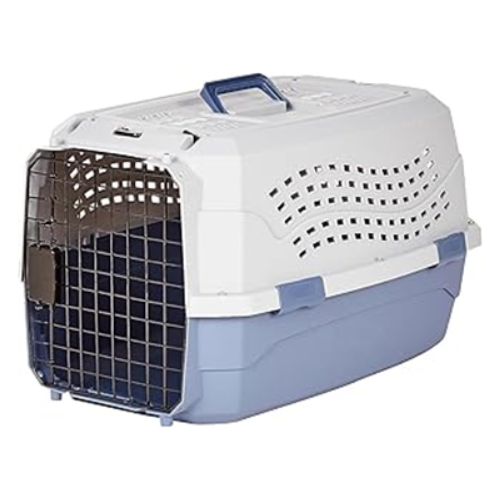
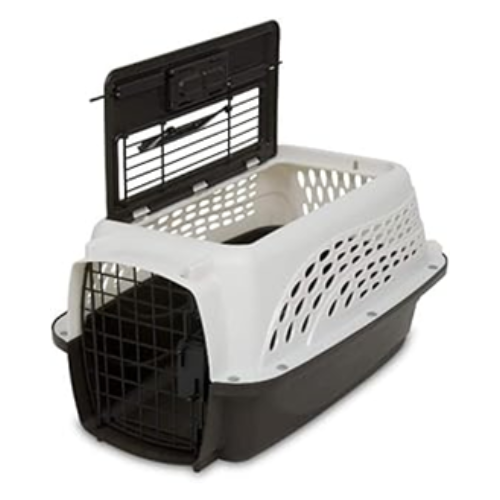
For veterinary clinic visits we recommend a hard-sided carrier with both top-opening and front-opening options, or one with an easily removable top. The carrier should also be large enough for your cat to stand up, turn around, and sit comfortably.

Once you have a good carrier, the next step is convincing your cat that the carrier is a wonderful place to be.

There are some further examples of preferred carrier designs at the end of this article.

Making the Carrier Part of Your Home (Not Hidden Away)

It is important to recognize that cats are creatures of habit. They detest anything new in their world. This means the carrier needs to be a regular part of their environment — out at all times as part of the furniture, not hidden away until it’s time to travel.
cat-carrier-training-top-removed with cat sleeping inside

Start by removing the top and the door (if your carrier doesn’t come apart, you can try skipping this step or obtain a carrier that does).

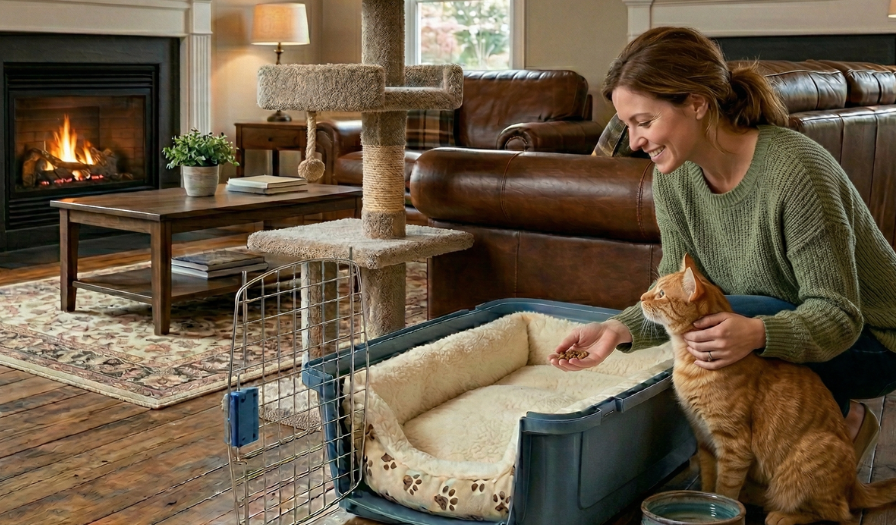
Place the carrier bottom in an area where your cat already enjoys spending time — at the base of the cat tree, next to the couch, or in your bedroom. Ideally, choose a spot where you are comfortable keeping the carrier long-term.

Add something comfortable in the bottom, such as a cat bed, towel, or blanket.

For the next few days, simply ignore the carrier. Keep your eyes open and observe: Does your cat sniff it? Sit in it? Ignore it completely? Or does she hiss when she sees it?

Once your cat has accepted the existence of the carrier bottom, it is time to convince them this is one of the greatest places ever. 

Why Leaving the Carrier Out Works

Cats feel safer with familiar objects. Keeping the carrier visible and part of the furniture helps your cat:

This simple step is one of the biggest game-changers for most cat owners.

Step-by-Step Carrier Training with Positive Reinforcement

cat training carrier

Phase 1: The Carrier Bottom Becomes Furniture

You’ve already taken the first important step — the carrier bottom is now out as part of the furniture and your cat is getting used to its presence. Now we can build on this association and make it even stronger and more positive.
treats cat training carrier

Phase 2: Making the Bottom a Happy Place

Pick a time of day when you have 5 to 10 minutes to just sit with your cat. Place some of her favorite treats and toys within easy reach.

When your cat approaches the carrier, give her a treat. In the beginning, toss the treats a short distance away from the carrier. This gives your kitty the chance to walk away and come back, learning that returning earns more treats.
If your cat steps into the carrier, give a treat right there and then toss one a few feet away. You are teaching your cat that stepping inside and returning is what earns the reward.

After your cat has repeated the behavior successfully about 5 times, take a short break. Toss a toy across the room or give several treats and walk away.

The next session can start a few minutes later if your cat is still interested, or the following day. As before, start with treats and toys ready. Begin by rewarding simple approaches, then gradually wait to treat until your cat places a paw inside the carrier.

At each session, start with a behavior your cat is doing easily (such as approaching or sniffing the carrier) and then slowly increase the difficulty for earning the treat — stepping in with one paw, then fully entering the carrier.

The goal is to reach the point where your cat starts the session by walking right into the carrier and maybe even lying down.

As an extra way to help your cat love the carrier, try feeding her meals right next to or inside the carrier bottom.

cat training carrier no door

Phase 3: Adding the Top

Now that your kitty is comfortable with the carrier bottom, it is time to add the top. This will feel like starting over and in many ways it is. Each time we add something new we are gently stretching your cat’s adaptability.

Secure the top to the carrier (leave the door off for now). If you have been feeding meals in the carrier, place the food near the entrance for a day or two, then gradually move it inside.
Continue short training sessions with treats and toys. Reward interest in the “new” carrier and slowly work up to rewarding your cat for entering with the top in place.

cat in carrier door training

Phase 4: Adding & Closing the Door

Next, add the door but keep it secured open.

Once your cat is comfortable entering with the door open, begin very short closing sessions: close the door for less than a second, then immediately open it and reward your cat for staying calm.
Gradually increase the amount of time the door stays closed. Work up to longer periods while your cat remains relaxed — no hissing, meowing, clawing, or bolting when the door opens.

Wow that was a lot of work! 
With consistent short sessions, most cats learn to accept the closed carrier calmly. Once your cat is comfortable being closed inside, the next step is teaching her that the carrier in motion is also safe — we’ll cover that in a future article.

Troubleshooting Common Kitty Carrier Problems

Even with the best plan, some cats need a little extra help. Don’t worry these issues are very common, and most cats can improve with the right approach.

Here are solutions for the most common challenges we see:

This is completely normal it may be a sign that your cat has built up some pretty negative feelings about the carrier.

The good news is you can rebuild positive associations with a little extra care:

  • Try a pheromone product such as Feliway, Zeniful, or Secure Cat. These synthetic feline cheek pheromones create a calming environment. You can also spray Feliway on the towel or bedding (allow 20–30 minutes for the alcohol to dissipate before letting your cat near it).
  • Feed your cat’s meals near the carrier. Start across the room and gradually move the bowl closer each day.
  • Start with just a special blanket in the intended location, then slowly slide the carrier bottom underneath so it stays mostly hidden at first. Gradually reveal more of the carrier over several days.
  • Use your cat’s absolute favorite treats and only offer them in association with the carrier. Start with high-value treats for any interest, then use them specifically for entering the carrier.

It’s very common for cats to take a step backward when we add the top — don’t get discouraged. Just slow down and go back a step:

  • Go back to the topless carrier until your cat is fully comfortable again.
  • Present the lid next to the carrier and reward any interest or calm behavior.
  • While your cat is in the carrier, slowly move the lid toward it and reward her for staying relaxed. If she leaves, start a little farther away next time and gradually get closer.
  • Practice placing the lid over your cat and immediately removing it, then rewarding. Slowly work up to leaving the lid in place for a few seconds before removing it.

Some cats are extra sensitive and need more support to feel safe. This doesn’t mean you’re doing anything wrong — it just means your cat may benefit from a different strategy. Your cat may need additional help to feel secure. This could mean trying a completely different carrier design or other interventions. Please call us at Caring Hands Veterinary Hospital so we can discuss the best options for your cat.

You absolutely can bring your cat on a leash, but we strongly prefer a carrier for these important reasons and everyone’s safety and comfort:

  • Safety around dogs — Even though we try to keep cats and dogs separate, accidents happen. A sturdy carrier keeps your cat safer and more secure than being on a leash if a dog notices her.
  • Moving through the hospital — If we need to take your cat to treatment areas or for diagnostics, she will feel much more secure inside her familiar carrier.
  • Safety for everyone — A startled cat on a leash or in arms can scratch or bite. The carrier protects both your cat and our staff.

Recommended Carrier Features for Veterinary Visits

As promised, here are the types of carriers we recommend at Caring Hands Veterinary Hospital:

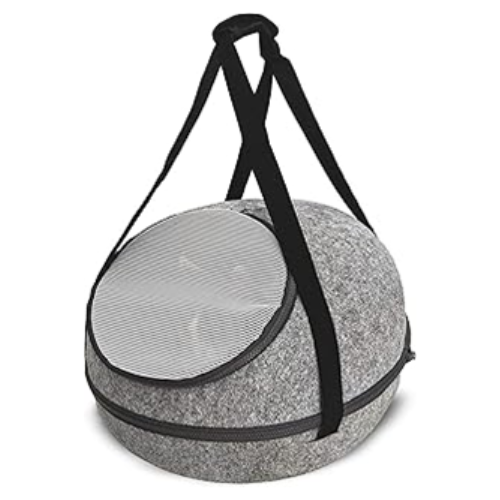
The essentials we look for are a hard-sided carrier with an easily removable lid. We also prefer lids with quiet, easy-to-manipulate clips or bolts that don’t make loud noises when the lid is removed or secured. Round carriers that unzip into a nice cat bed shape are also excellent options.

Key features to look for:

  • Hard-sided construction for safety and security
  • Top that lifts off completely or has a large top-opening door
  • Front door that opens (for easy loading)
  • Enough room for your cat to stand up, turn around, and sit comfortably
  • Quiet, smooth clips or latches (loud snaps can scare cats)
  • Good ventilation on multiple sides

Let’s Make Pet Training Easier—for Both of You

You’ve now got the tools to turn your cat’s carrier from a source of stress into a safe, familiar space. With patience and short, positive sessions, most cats can learn to accept and even enjoy their carrier.

At Caring Hands Veterinary Hospital in Billings, we want every visit to feel calm and low-stress for both you and your cat. Whether it’s time for an annual wellness exam, vaccines, or just a check-up, we’re here to support you.

Call Our Caring Team

We're here to answer your questions and help you schedule care.

Book Online Anytime

Whether it's training, a recheck, or general advice, we’ve made booking simple.

About the Author

Dr. Erika Cantamessa

Dr. Erika Cantamessa, DVM

Dr. Erika Cantamessa, DVM has been part of the Caring Hands Veterinary Hospital team since 2014. She enjoys helping pet owners better understand their animals’ health and believes education is an important part of good veterinary care. Outside the clinic, Dr. Cantamessa enjoys crafting, needlework, and spending time with her family. Her household currently includes a Golden Retriever named Bob and two cats, Luna and July. She is a native of Wallace, Idaho, and did her undergraduate work at Hamline University in St. Paul, MN. She received her DVM from Washington State University College of Veterinary Medicine in Pullman, WA.