

Both natural breeding and artificial insemination have their place in responsible reproduction, but they require entirely different levels of timing, testing, and veterinary oversight. Understanding the clinical and practical differences between these two methods is the first step in setting your dogs—and your future puppies—up for a healthy, successful outcome. If you’re considering breeding, you can learn more about our breeding and reproductive services here.
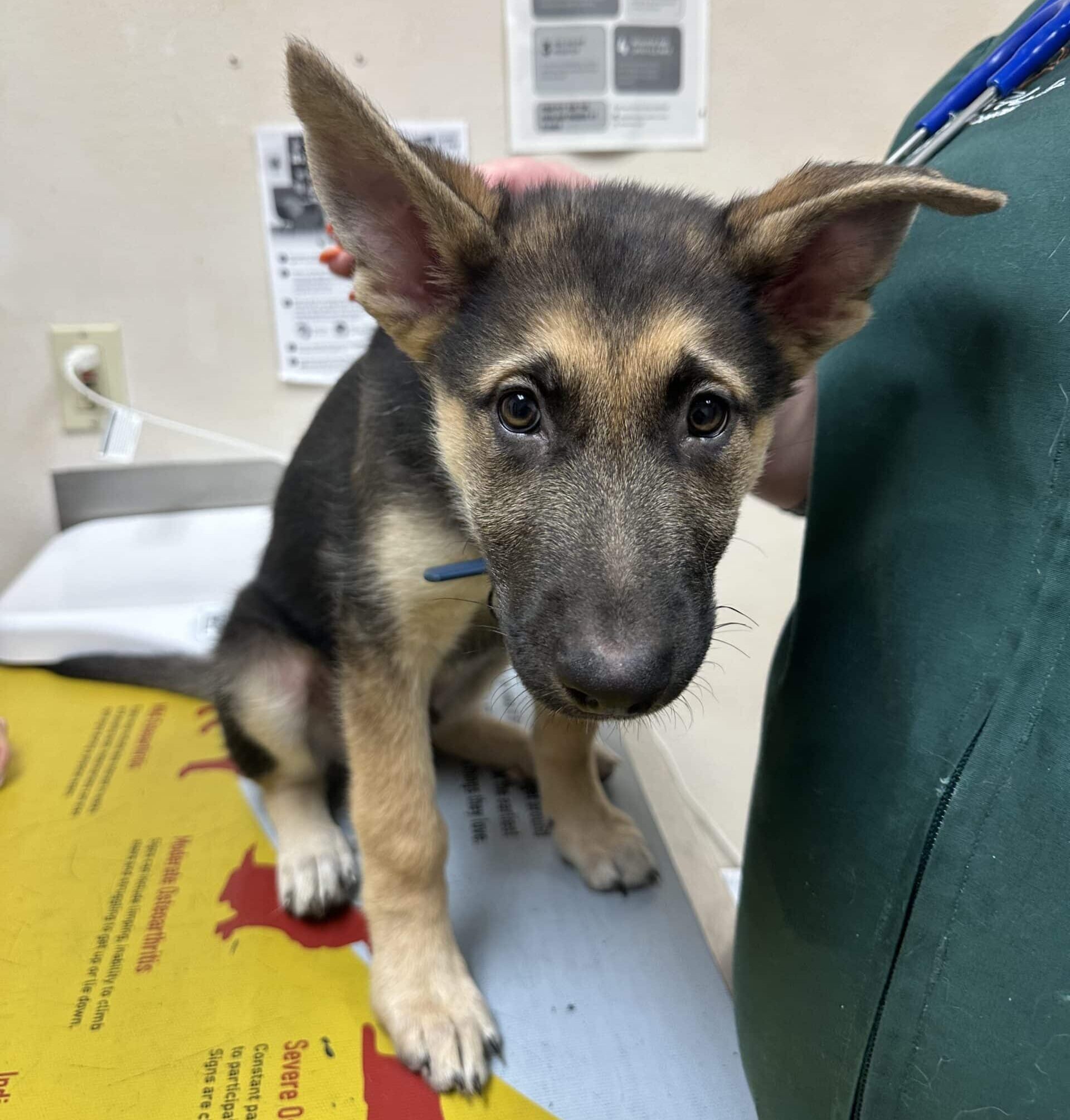
For many owners, natural mating is the baseline expectation. It is the traditional method, and for healthy, behaviorally sound dogs, it can be highly successful. From a logistical standpoint, it requires both the male and female to be physically in the same location. Out here, that often means coordinating travel across state lines, ensuring both dogs are ready at the exact same time.
While natural breeding may seem straightforward, it is important to view it through a medical lens. In practice, we often see complications arise even between healthy dogs. If either dog is inexperienced, anxious, or if the female is not fully in estrus and ready to accept the male, the risk of physical injury to both animals increases significantly.
Additionally, natural breeding carries a direct risk of transmitting infectious reproductive diseases. This is why strict health screening—specifically testing both dogs for Brucella canis—is an absolute requirement before any natural breeding occurs. Brucella is a contagious bacterial infection that can devastate a breeding program, causing infertility and pregnancy loss, and it can easily be passed through natural contact.
This approach is generally best suited for dogs that:
When natural breeding isn’t logistically possible—or simply isn’t the safest medical choice—we turn to artificial insemination. This allows breeders to utilize genetics from all over the world without the stress of transporting dogs. It also eliminates the risk of physical mating injuries and significantly reduces the transmission of infectious reproductive diseases. Depending on the type of semen used (fresh, fresh-chilled, or frozen) and the specific reproductive history of the female, we utilize three primary methods of insemination:
The most basic form of artificial insemination involves depositing semen into the vaginal vault, closely mimicking the placement of natural breeding. This method is performed while the dog is awake and is highly effective when using fresh or high-quality fresh-chilled semen. However, because the sperm still must navigate through the cervix to reach the uterus, any semen that has either a shortened lifespan or shortened number of sperm should not be delivered via standard vaginal artificial insemination. Frozen semen is unlikely to be successful with this method of delivery.
In modern veterinary practice, TCI has become the gold standard for many breedings. Using a specialized endoscope, we can visually navigate past the cervix and deposit the semen directly into the uterus. This drastically reduces the distance the sperm must travel, making it the ideal choice for frozen semen, older males, or valuable semen with lower motility.
The most significant advantage of TCI is that it places the sperm close to the eggs for fertilization and has greater sperm conservation. That means that it greatly increases that chance that every egg she releases will be fertilized and the greater chance for a full litter. It is a short outpatient procedure, without the need for anesthesia and surgery.
While TCI has largely replaced surgical insemination in our practice due to its non-invasive nature, surgery is still medically necessary in specific situations. We may recommend this route if we are dealing with exceptionally poor semen quality, known anatomical abnormalities, or if we need to visually assess the health of the uterus (such as checking for cysts) during the breeding process.

It is vital to understand that artificial insemination is only as successful as its timing. Because shipped and frozen semen survive for a much shorter time inside the female than fresh semen from natural breeding, we cannot rely on physical or behavioral signs of heat. Accurate, in-house progesterone testing is absolutely required to pinpoint the exact window when ovulation occurs and the eggs are mature. Without this precise hormone mapping, even the most perfectly executed TCI will fail.
In clinical practice, there is no single “correct” way to breed a dog. The right choice depends on a careful evaluation of medical, behavioral, and logistical factors. When sitting down with owners to map out a breeding strategy, we look at the entire picture: the geographic location of the stud, the behavioral history of both dogs, the type of semen being used, and the specific structural or medical needs of the breed.
If you are working with a local stud and both dogs are behaviorally sound, physically mature, and have cleared their infectious disease and genetic screenings, natural breeding can be highly successful.
However, if you are bringing in genetics from across the country, using valuable frozen semen, managing a breed with structural limitations, or simply wanting to eliminate the risk of mating injuries and disease transmission, artificial insemination—particularly TCI—is often the most responsible and medically sound choice.
Not necessarily. When performed correctly, vaginal artificial insemination and TCI yield excellent conception rates. The primary reasons artificial breedings fail are poor semen quality and inaccurate ovulation timing. With precise, in-house progesterone testing and viable semen, intrauterine placement via TCI provides conception rates that rival, and sometimes exceed, natural breedings.
No—the procedure can be performed while your female is fully awake using specialized endoscopic equipment. We visualize the cervix and navigate through it to deposit semen directly into the uterus. We can provide sedation, however, to help your dog have a more relaxing experience. We will tailor the procedure to her needs.
Relying on physical signs or behavioral changes is a common, yet risky, approach. The visible signs of a heat cycle (swelling, discharge, and flagging) do not directly correlate with the day of ovulation. Progesterone testing is the only medically accurate way to determine when the eggs are mature and ready for fertilization, which is absolutely critical whether you are using natural mating or artificial insemination.
We strongly recommend scheduling a pre-breeding reproductive consultation one to two months before your female’s anticipated heat cycle. This allows adequate time to complete necessary genetic and orthopedic evaluations, perform mandatory Brucella testing, and map out a clear timeline for tracking her cycle. Proper preparation significantly improves the likelihood of a healthy pregnancy and a successful litter.
The most critical phase of any breeding plan—whether you choose natural mating or artificial insemination—happens long before the actual breeding takes place. Scheduling a reproductive consultation one to two months prior to a heat cycle ensures ample time for mandatory Brucella testing, health screening, and mapping out a precise ovulation strategy. Waiting until a cycle begins severely limits your clinical options.
Whether you are managing an established breeding program or preparing for your first litter, veterinary guidance provides the medical framework needed to reduce preventable risks and improve your chances of a healthy pregnancy.
We're here to answer your breeding questions and help you schedule care.
Whether it's breeding, surgery, a recheck, or general advice, we’ve made booking simple.
