
Managing Heat Stress in Pets

Summer in Montana brings long days and plenty of outdoor activity, but our dry heat and sudden temperature spikes introduce significant medical risks for the animals in our care. In this article, Dr. Amber Herron explains the clinical realities of heat stress across species to help owners in our region better understand, identify, and prevent thermal emergencies before they become life-threatening.
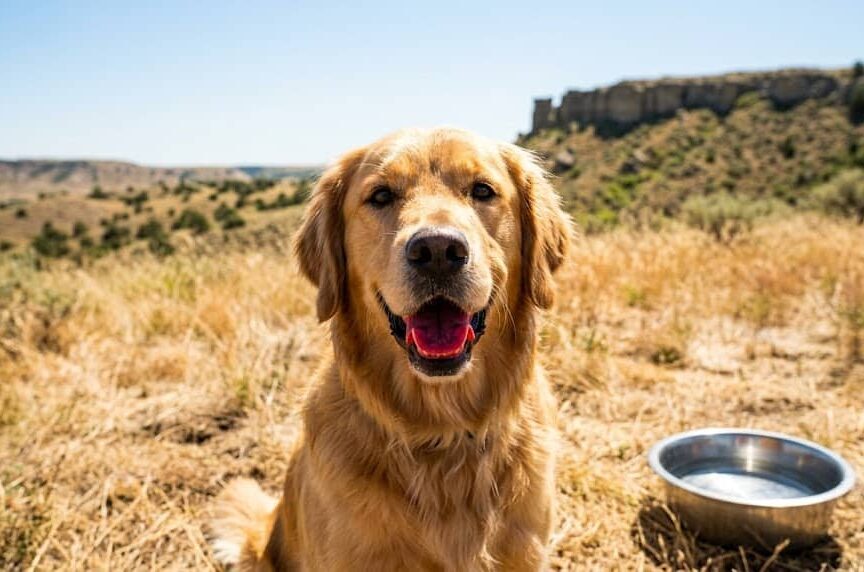
a dog in a yellow field, indicative of summer, panting next to a water bowl

In our clinic, we frequently see the severe consequences of summer temperature spikes. While heatstroke is most commonly associated with a dog pushed past its physical limits on a hike or trapped in a vehicle, heat stress is a serious medical threat that extends to cats, birds, pocket pets, and reptiles alike.

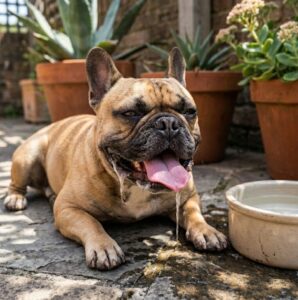
A French Bulldog showing early signs of heat stress, panting heavily with thick drool hanging from its mouth, while resting on a stone patio next to a water bowl.

The fundamental issue across all these species is that animals simply do not regulate their core temperatures as efficiently as humans do. When the ambient heat rises, their natural cooling mechanisms can be rapidly overwhelmed. Whether you are managing a working dog in the field, monitoring a rabbit indoors during a heatwave, or adjusting a reptile’s terrarium, preventing a life-threatening emergency requires understanding these biological limits and recognizing the earliest clinical signs of distress.

How Our Pets Handle the Heat

Unlike humans, who rely on widespread sweat glands to regulate body temperature through evaporation, our pets have highly limited cooling systems. Because each species utilizes different physiological adaptations to dissipate heat, they also show entirely different signs of distress.

Let’s take a closer look at how our most common pets attempt to manage rising temperatures—and where those biological mechanisms fall short:

a fluffy dog enjoying its check up at the vet

Dogs

Canines rely almost exclusively on panting (exchanging warm internal air for cooler outside air) and vasodilation (expanding blood vessels near the skin’s surface, particularly in the ears and face) to release heat.
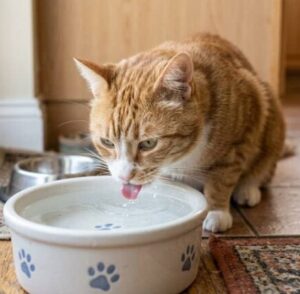
cat drinking water e1782207121840

Cats

Cats lack effective sweat glands and cool themselves primarily by seeking shade, resting, and grooming—the saliva evaporating off their coat provides only a minor cooling effect. It is critical to note that while dogs pant to cool down naturally, open-mouth breathing or panting in a cat is always a sign of severe physiological distress or a medical emergency.
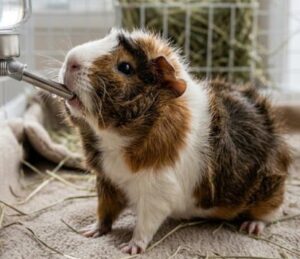
a thirsty guinea pig drinking water

Pocket Pets (Rabbits, Guinea Pigs, Chinchillas)

Small mammals such as rabbits, guinea pigs, and chinchillas are exceptionally sensitive to heat because they cannot sweat or pant effectively. Rabbits, for instance, rely on the large blood vessels in their ears to dissipate heat, but in temperatures climbing over 80°F (26°C), this limited mechanism fails rapidly.
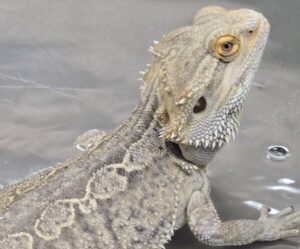
reptile scaled e1782205721554

Birds and Reptiles

Birds attempt to cool down by holding their wings away from their bodies and engaging in open-beak breathing. Reptiles, on the other hand, are ectothermic (cold-blooded), meaning they rely entirely on their surrounding environment to regulate their body temperature. If an enclosure overheats without a proper thermal gradient (a cooler zone to retreat to), they can quickly suffer fatal heat stress.

High-Risk Breeds and Species

While any animal can suffer from heat stress, certain anatomical and physiological factors significantly increase the risk. In our clinic, we frequently see severe cases involving:

Flat-faced dogs and cats—such as Bulldogs, Pugs, French Bulldogs, and Persian cats—have compromised airways. Their inefficient respiratory anatomy makes panting far less effective at cooling their bodies.

Highly driven breeds often lack the self-preservation instinct to stop working or running when they are overheating. They will push themselves into critical condition if the handler does not intervene.

Chinchillas, guinea pigs, and rabbits are built to conserve heat and can easily succumb to heatstroke even indoors if air conditioning fails or their enclosure is in direct sunlight.

Animals with underlying cardiovascular disease, obesity, or respiratory conditions have a severely reduced capacity to manage thermal stress.

Recognizing the Clinical Signs of Heat Stress

Understanding the progression from mild heat stress to life-threatening heatstroke is critical. Early intervention dictates the medical outcome.

Responding to Heat Stress: Immediate Steps

If you suspect your pet is suffering from severe heat stress, your immediate goal is to safely lower their core temperature while transporting them to a veterinary hospital.

purse pup scaled e1782206271845

Remove from the Heat

Move the animal to an air-conditioned environment or deep shade immediately.
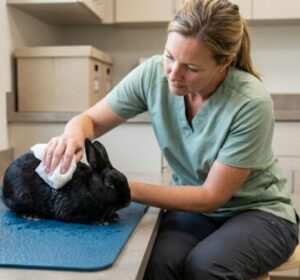
bunny cooling e1782206366619

Apply Cool Water / Damp Towel

For dogs and cats, wet the coat down to the skin with cool—not ice-cold—water. Focus on the underside, groin, and paws. For rabbits and pocket pets, gently wipe their ears and body with a cool, damp towel.
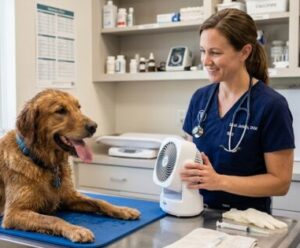
a vet using a small fan to cool off a dog

Ensure Airflow

Direct a fan or air conditioning vent onto the wet animal to maximize evaporative cooling.

an ice bucket with a cancel sign in front of it

Do Not Use Ice

Applying ice or freezing water causes peripheral vasoconstriction (narrowing of the blood vessels at the skin’s surface). This actually traps heat inside the body's core and worsens the condition.
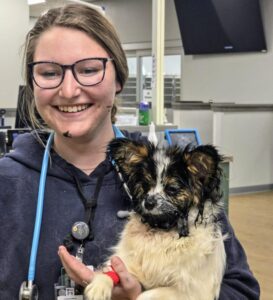
a vet holding her patient, a small dog

Seek Veterinary Care

Even if the pet appears to recover, internal organ damage can manifest hours or days later. A veterinary assessment is necessary to ensure stability. Call Caring Hands at 406-656-6320.

Pet Heat Stress Prevention

Preventing heat stress requires active management, whether you are outdoors or managing an indoor habitat.

  • Time Your Activity: For dogs, confine rigorous exercise to the early morning or late evening. Avoid the intense midday heat entirely.
  • Hydration is Non-Negotiable: Ensure all pets have constant access to fresh water. For dogs on hikes, carry ample water and offer it frequently.
  • Manage Enclosure Placement: Never place bird cages, reptile terrariums, or small mammal enclosures in direct sunlight or near windows that magnify solar heat. Ensure exotics have properly calibrated thermostats and a thermal gradient in their habitats.
  • Indoor Cooling Aids: For pocket pets, providing ceramic tiles cooled in the refrigerator or frozen water bottles wrapped in a towel gives them a safe surface to rest against when indoor temperatures rise.

Pet Heat Stress FAQs

In extreme conditions, heatstroke can develop in a matter of minutes. This is why we strongly advise against leaving dogs in parked vehicles. For exotics, a terrarium left in direct sunlight can reach lethal temperatures just as rapidly.

Generally, no. A thick coat provides a layer of thermal insulation that protects against direct solar radiation and sunburn. Instead of shaving, focus on thorough brushing to remove the dense undercoat, allowing air to circulate against the skin.

No. While dogs use panting as a primary cooling mechanism, cats should not pant. If a cat is panting, they are severely stressed, overheating, or experiencing a respiratory/cardiac issue. Move them to a cool, quiet place immediately and contact your veterinarian.

Need Veterinary Care?

If you have concerns about your pet’s ability to handle the summer heat, or if you need to schedule a wellness checkup, our team is here to help. We provide care for all your furry, feathered, and scaled family members—including dogs, cats, birds, reptiles, and pocket pets.

Call Our Caring Team

We're here to answer your heat stress questions and help you schedule care.

Book Online Anytime

Whether it's surgery, a recheck, or general advice, we’ve made booking simple.

About the Author

Dr. Amber Herron, DVM

Dr. Amber Herron, DVM

Dr. Amber Herron, DVM is the owner and lead veterinarian at Caring Hands Veterinary Hospital in Billings, Montana. She has practiced veterinary medicine in the Billings area since 2006 and became owner of the clinic in 2018. A Kansas State University graduate, Dr. Herron earned her Doctorate in Veterinary Medicine after completing a degree in microbiology. She provides care for a wide range of small animals and enjoys working with everything from dogs and cats to birds, pocket pets, and reptiles. Outside the clinic, she spends time with her husband Jim and their two children and is involved in responsible Bulldog breeding.